A bakery owner is asked to bake a wedding cake for two women who are about to get married, the owner wants to decline the request because it goes against their religious beliefs but they don't for fear of being sued by the couple. Two women are excitedly planning their wedding and they find a bakery they want to use to make their cake, but the owner declines because she religiously doesn't believe in a wedding between two women, so the women now have to find a bakery that won't turn them down because of who they are. So who is the real victim in these situations, the bakery owner or the gay couple? That is exactly what Patrik Jonsson discussed in his article "Arizona 'religious freedom' bill: Attack on gays or shield for some Christians?" published in Christian Science Monitor. In his work he explains this with mindfulness of both sides, careful not to show one side as any better than the other, using logos, pathos, and ethos.
Starting with the most prominent in his article, Jonsson uses a lot of fact and reasoning to explain how both the religious right and the LGBT community could both be seen as victims depending on whether or not SB 1062 went into law. For the religious right he states "Religious conservatives say Democrats are being hyperbolic about the bill's possible impact, suggesting instead that the real issue is about current law--and the courts--discriminating against the private beliefs of religious individuals."(Jonsson, Patrik) He then counters that with what the left side believes writing, "The Arizona legislation has sparked outrage from the primarily gay rights activists and Democrats, many of who say the proposal would enshrine some kinds of discrimination and has 'no role in a modern society', as state Senate minority leader Anna Tovar(D) said in a statement." This shows how black-and-white he is when explaining how each side feels victimized.
The emotional side of this article comes from how passionately each side feels about the issue and how they both feel as though they have been wronged. He cites House minority leader Chad Campbell in his article to show the intensity of the issue. Campbell said, "We're telling [gays], 'We don't like you. We don't want you here. We're not going to protect you.'" Just like with logos, the author comes back and counter with what Rep. Eddie Farnsworth, who sponsored SB1062 is saying. "We're making some tweaks[in Arizona] because of what's been going on in other states where people have been punished for their beliefs." This shows also how Jonsson is careful to represent both sides equally.
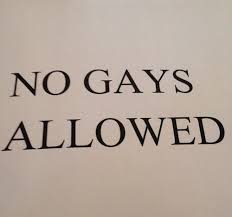

Finally, Patrik Jonnson using ethos tries to convince his audience that he has some sort of authority to write this article. This is the one that he did the worst on. By representing both sides equally and having a counter argument to what he writes shows that he isn't really on any side. He definitely did his research before writing this piece and that is his one saving grace when it comes to using ethos. An example of that is he states specific examples of cases happening in the country to show that there might be good reasoning behind this bill. Writing for a Christian Science news organization might lead the audience to believe the author had an opinion on which side is really the victim but that definitely wasn't evident.
Patrik Jonsson didn't do that great of a job in this article using logos, ethos, and pathos. He never really showed that he leaned one way or another on who is being hurt more by this legislation. For every point he made on behalf of one side, he countered with an equal point for the other. In the title of his article he asks the question of whether this is an attack on gays, or if it indeed is protecting some religions but never answered his own question.
Works Cited
Jonsson, Patrik. "Arizona 'religious freedom' bill:Attack on gays or shield for some Christians?." Christian Science Monitor 21 Feb. 2014: N.PAG. Academic Search Premier. Web. 9 Oct. 2014

Really good job on your post. I like how you identified the both sides of the author. What is your opinion on the topic? I believe that everyone has the right to your own opinion and their own lifestyle. Not everyone agrees with gay marriage and not a lot of of people agree with religion. Either way someone is always going to be at fault.
ReplyDelete